




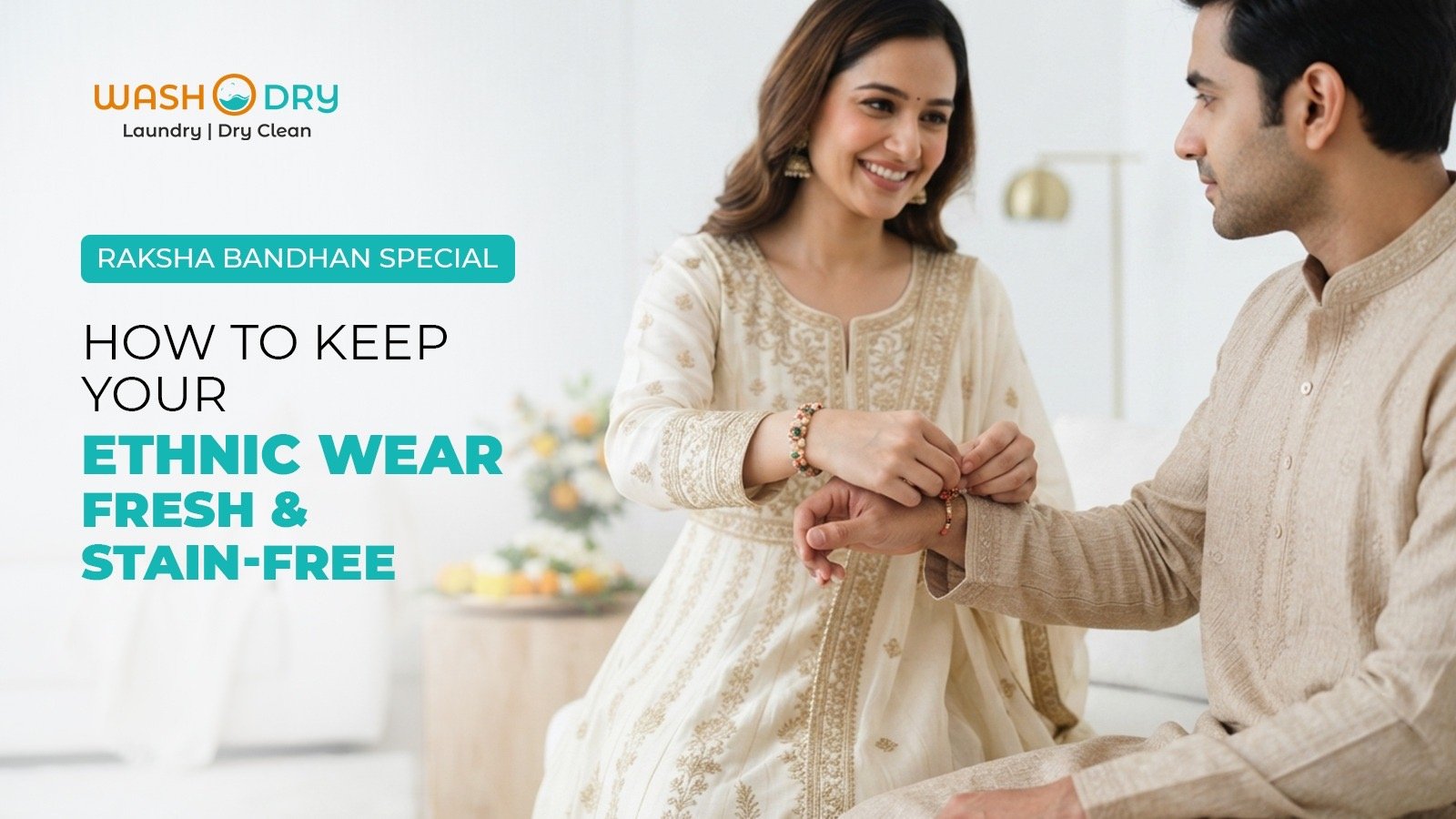
Raksha Bandhan is one such festival where not only the rakhi thali but even the wardrobe receives equal attention. Ethnic attire such as silk sarees are dug out from the closet while the new kurtas are ironed to perfection. However, all of these get battered on the day of the festival owing to all the mithai that one has, the tilak that gets put on, the hugs that you receive, and ultimately the spilled food that happens at lunch. You will find a few spots of turmeric on your dress along with some chandan marks, and by the time evening arrives, the silk saree or the beautifully embroidered kurta tells a very different story from what was initially planned.
However, if proper care techniques are applied along with professional help from dry cleaning services, then no worries as your wardrobe is sure to be in mint condition for another event like the wedding, Diwali or even next year’s Raksha Bandhan.
Why Special Focus is Needed for Ethnic Wear
While everyday cotton clothes can be taken care of in the usual way, ethnic wear has to be treated separately as they are generally made out of tender and rather expensive fabrics like silk, georgette, chiffon, banarasi brocade or any kind of fabric decorated with zari, beads, sequins or mirror work. These fabrics cannot be cleaned easily at home.
Use of machines in washing could spoil the colour of the cloth as well as affect the threadwork done. This is when the importance of dry cleaning arises. In dry cleaning, solvents are used in place of water in cleaning fabrics. Consequently, the structure of the fabric, its colour, and decoration remain intact even after repeated dry cleaning. If you have purchased an expensive saree or Sherwani for Raksha Bandhan, you should definitely opt for dry cleaning.
The Raksha Bandhan Stain Survival Guide
There is uncertainty in what to expect from festival days in terms of stains. Here are some of the common types and what should be done with them before sending the clothing to professional cleaners:
Turmeric & Kumkum Stains: This is probably one of the most frequent stains because it seeps very quickly into the cloth. What is essential here is that you should never rub the stain, as that would only make it penetrate further into the cloth.
Sweet & Mithai Stains: Sweets that contain ghee like ladoos and barfis create oil stains that are likely to spread if water is used. Again, the thing you need to do here is to blot without rubbing.
Gravy & Curry Stains: Gravy is always there in festival lunches, and it results in grease stains, thus requiring urgent action. In case of oil stains, just sprinkle some talcum powder on them.
Perfume & Attar Stains: Alcohol-based perfumes may result in stained fabrics due to lack of proper air circulation before storing clothes.
Whatever the stain may be, it is essential to act immediately. Probably the most common factor for ruining ethnic dresses is amateurs’ treatment of stains.
Why Professional Dry Cleaning Services Make the Difference
- Stain Cleaning Safely: Spots from turmeric, kumkum, oil, and food stains need to be treated separately. While professional stain cleaning makes use of special chemicals and techniques to remove stains without damaging the rest of the fabric, it becomes next to impossible to accomplish this through any other home remedy.
- Protection of Embellishments: It’s a fact that sequins, mirror work, zari bordering and embroidery are very delicate. They tend to come off easily during machine washing at home. However, professional dry cleaning is much gentler with these aspects.
- Proper Pressing and Finishing: Apart from simply cleaning a dress, a professional dry cleaning service also makes sure of proper pressing and finishing so that pleats are in place and the fabric hangs as intended.
- Odour and Fragrance: Festival days involve a lot of movement, eating and sitting in the same clothes for extended periods.
Laundry Habits That Extend the Life of Your Festive Wardrobe
Besides the large-scale cleaning at the time of Raksha Bandhan, there are a few regular habits when it comes to laundry that help in maintaining ethnic wear throughout the year:
- Do not overcrowd your wardrobe: Sarees and kurtas should have enough space in the wardrobe since crowding of clothes will make them wrinkle and create moisture and ultimately result in mildew.
- Clean them on a regular basis: Even clothes that look to be perfectly clean gather dust particles and perspiration and oil from the skin. It is better to follow a regular laundry schedule and take the clothes for professional cleaning once in a while rather than waiting till they become dirty.
- Keep them dry: Keep the clothes dry before putting them in your wardrobe. This helps keep odour and moisture away.
- Wrap the silk sarees in muslin: Wrap the silk sarees in muslin cloth instead of plastic to avoid yellowing of the fabric.
- Take care of the stains: The stain gets harder to remove the longer it stays there. Therefore, it is important to take note of the stain and get the garment cleaned as soon as possible.
Planning Ahead for Raksha Bandhan
- When you’re aware that Raksha Bandhan is just around the corner, do not wait until the day itself to give a thought to how your outfit is in terms of cleanliness. Here are some steps to follow:
- One week prior: Get the outfit that you plan on wearing ready by sending it for dry cleaning. This will clean off any dust or mild odors from storing the outfit.
- One day prior: Iron or steam the outfit.
- Post-festival: Do not directly put the outfit away in your laundry basket or storage. Instead, first check for stains and take the outfit to a dry cleaner as soon as possible for the stain removal process.
Trust the Experts With Your Festive Wardrobe
The concept of Raksha Bandhan revolves around the enjoyment aspect. It does not concern itself with the issue of staining of costly silk fabrics and pleating of the same. The best way to enjoy this Raksha Bandhan without any anxiety about your clothes is to make use of professional dry cleaning services for the precious items of clothing that you have. Right from cleaning to stain removal, having an effective laundry service partner will make everything easy.
On this Raksha Bandhan, relish your rakhis and sweets without feeling guilty about ruining your ethnic attire. Ensure that your attires remain safe with dry cleaning and laundering services before and after the festival.
Feeling like giving your festival wardrobe its due care? Book your pickup with the nearest dry cleaning service and step out on Raksha Bandhan in an attire as new as the festival itself.
Frequently Asked Questions
Should I get my ethnic wear dry cleaned before or after Raksha Bandhan?
For ethnic clothes that are kept inside for a long time, they should also be dry cleaned before and after Raksha Bandhan because during festivals, clothes get many stains caused by tilak, mithai, or food.
Can dry cleaning remove turmeric and kumkum stains from silk sarees?
Yes, Turmeric and kumkum stains are quite hard to remove. However, special solvents used by professional dry cleaners such as Washodry can get rid of the stains without harming the silk fabric.
Is dry cleaning good for heavily embroidered or zari-work outfits?
Definitely yes, dry cleaning is the best thing for embroidered ethnic wear. Unlike normal laundry, there is no agitations involved, hence sequins, mirror work, and zari won’t become loose or fall off.
How do I find a good dry cleaning service near me for ethnic wear?
Find a dry cleaner who works with fabrics like silk, georgette, and chiffon, also make sure to check the reviews about stain removal. It will be much faster and easier to search online for “dry cleaning near me” and read some reviews.
When should I address the issue of a stain on my clothes for best results?
As soon as possible. Fresh stains that have been created by oils, turmeric or gravy will be much easier to deal with than old ones. Do a light blot at home to soak up the excess material; do not rub it, keep your silk dry, and bring the garment to professional cleaners.