




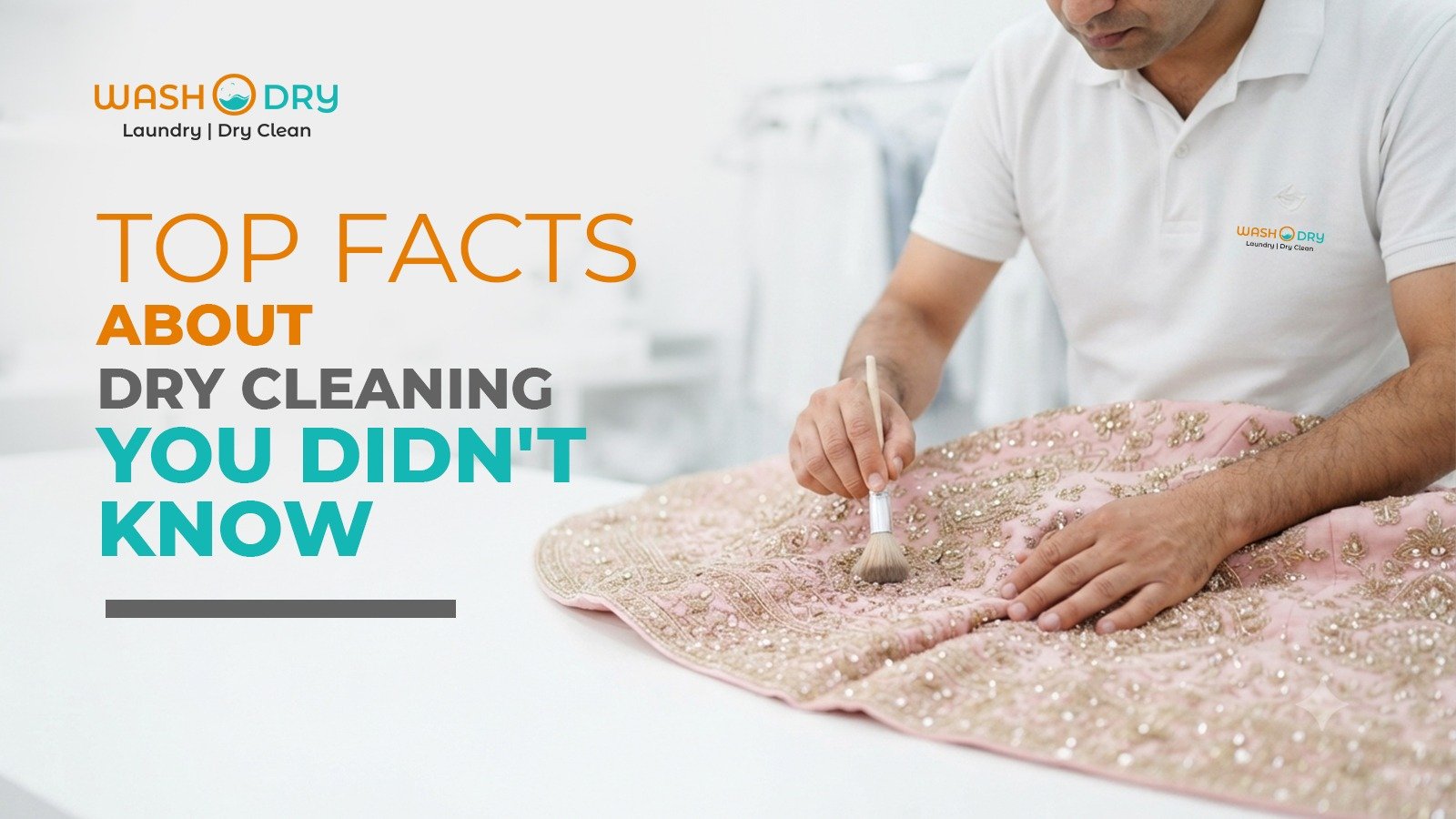
All of us take our formal shirts, suits, sarees, and fine fabrics to get dry cleaned without ever wondering about the method used to clean them. We just assume that it’s nothing but an advanced form of washing. All we do is give the clothes to the cleaners and return to pick them up after a few days in a spotlessly clean condition. There’s a lot more to dry cleaning than meets the eye. The method is not only interesting but rather intriguing with a history of its own and a process that needs to be demystified.
Here are some top Facts About Dry Cleaning You Didn’t Know before are, mentioned below.
1. Dry Cleaning Isn’t Actually “Dry”
This is a misleading term. Dry cleaning does not imply that the clothes will remain totally dry during the process; rather, water is not the main ingredient used in the cleaning process. The clothes are cleaned through the use of a chemical solution that acts to dissolve oils, greases, and stains without causing the swelling and shrinkage effects associated with water.
2. The Process Dates Back Further Than You’d Think
Dry cleaning technology is not new to us. It can be traced back to the 1800s, where early versions of Dry Cleaning
using various solvents that could dissolve stains which water and soap were unable to clean had been identified. The solvent cleaning method has over time become more developed in terms of safety and sophistication, with the present dry cleaning model being fully equipped with dry cleaning machines and other dry cleaning equipment..
3. Not All Fabrics Need Dry Cleaning, But Some Absolutely Do
While many people think “dry clean only” is just another label used by a manufacturer to play safe, there are times when it is an absolute requirement. The use of water and a detergent to wash fabrics such as silk, wool, velvet and some synthetic blends may result in fabric distortion, shrinking or the development of water marks. Items such as blazers, suits, and sarees with elaborate embroidery need to maintain their shape using a solvent wash only.
4. Stains Have a “Best Before” Window
The one surprising truth about stains: the longer they sit on your garment, the more difficult they are to remove, even by a professional. Once an oil stain, ink, or food stain sets in, it begins to bond with the fabric fibers in just a few hours. That’s why it is vital for a competent dry cleaning service to know when the stain was formed, as it makes all the difference in the method used.
5. Pressing and Finishing Matter As Much As Cleaning
Cleaning alone is only half the process. The freshly pressed and ironed state you achieve is not the result of the solvent, but the process through which the clothing is re-shaped by professional machinery, the collar and cuff restoration and giving your suit or shirt a like new appearance. This is one of the main reasons why your clothes come out of the dry cleaner’s much better than steamed at home.
6. Solvents Today Are Far Gentler Than You Might Assume
It is a mistaken belief that the cleaning agents used during dry cleaning service are toxic and old fashioned. On the contrary, much progress has been made in the industry regarding the use of safer and eco-friendly solvents in recent years. The modern cleaning systems used in such facilities are much less harmful to the fiber of the clothes but at the same time deliver high-quality cleaning results.
7. Frequent Dry Cleaning Doesn’t Damage Clothes — Neglect Does
A number of individuals shy away from washing their clothes because they think that the whole process is “rough.” The truth of the matter is that fabric wears faster when stains, perspiration, and oils are allowed to sit inside the fabric for long periods of time. In fact, getting your clothes cleaned regularly can greatly increase their lifespan.
8. Not Every Cleaner Follows the Same Standard
This is a key point you need to know: there is variability from one service provider to another. Two shirts laundered by two different dry-cleaners may be returned at significantly different levels of quality, with one being fresh and without any stains while the other one may still retain some signs of stains and an overall harsh feel. There are many factors involved in such variability, including the quality of solvents used, machines’ condition, and proper training of the staff.
9. Turnaround Time Reflects the Process, Not Just Convenience
Promise of Same Day Cleaning is appealing; however, a proper garment cleaning procedure requires some time to be spent on inspections, pretreatments, washing, drying, pressing, and checks of results. A trustworthy dry cleaning company schedules all procedures accordingly because of their thoroughness, not because they have to fit them into the tight time frame. When choosing among several cleaners, consider their speed of work.
10. It’s Not Just for Clothe
Whereas shirts, suits, and sarees are some of the things that are sent for laundry service, the solvent cleaning process can also be applied on curtains, leather jackets, blankets, and some forms of upholstery. This is because they are too large and sometimes too delicate to be laundered by ordinary laundry machines at home.
Why This Matters for How You Choose a Cleaner
Once you know what really goes into the whole process, it gets a lot easier to appreciate how there is no such thing as the absolute cheapest way. Proper dry cleaning keeps your clothes in good condition in terms of their shape, color, and material – this depends solely on the solvent, the equipment being used, and the expertise of those who will be taking care of your clothes.
When searching for a dry cleaning business which will treat your garments with the care that they deserve, from an ordinary suit to a special occasion saree and even a bulky object like curtains and leather jackets, you might want to look for someone who does not consider each one of your clothes as another item in the line.
Final Thoughts
The process of dry cleaning is much more scientific and practical than people think of it to be. From its extensive history to the science involved in cleaning clothes using solvents and finishing them professionally, there is a certain level of craftsmanship in making sure your clothes are returned in tip-top condition. The next time you take your clothes for dry cleaning, you will know exactly what goes on behind those counters.